



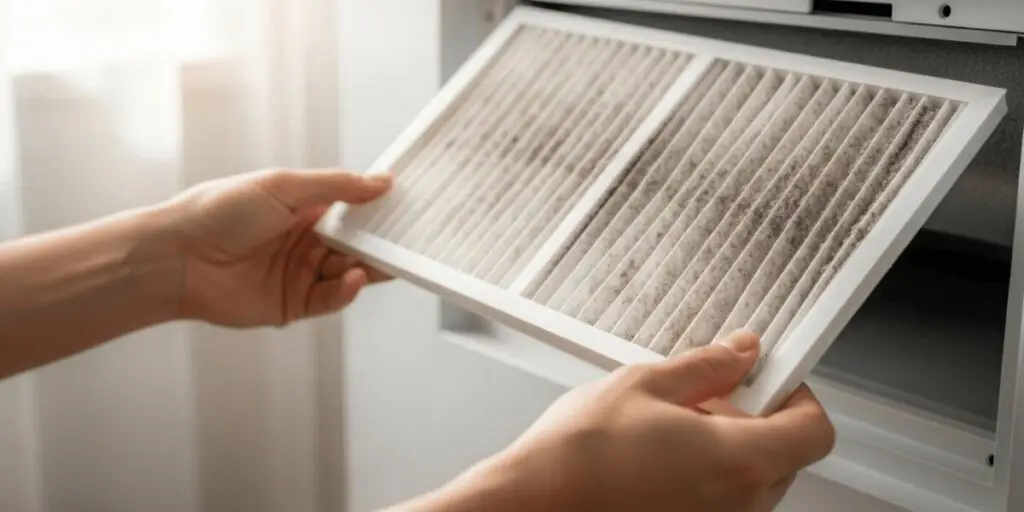
Your air filter does not fail all at once. It slowly restricts airflow over time, forcing your HVAC system to work harder long before most homeowners notice a problem.
During spring and summer in the Coachella Valley, air conditioners often run for extended hours every day. That increased runtime means filters collect dust, pollen, pet dander, and airborne debris much faster than they do during milder seasons. Even a filter that looks only slightly dirty can reduce airflow enough to impact cooling performance, indoor comfort, and energy efficiency.
The challenge is that there is no single replacement schedule that works for every home. Factors like pets, allergies, desert dust, occupancy, and filter type all affect how quickly a filter becomes clogged.
If you are wondering how often you should change your air filter during spring and summer, the answer depends less on the calendar and more on how your home and HVAC system operate together. Below is a practical guide to knowing when to replace your filter, what warning signs to watch for, and how proper filter maintenance helps protect both comfort and system performance.
Quick Answer: How Often Should You Change Your Air Filter?
Most homeowners should check their HVAC air filter monthly during spring and summer and replace it every 30 to 90 days depending on system usage, pets, allergies, dust levels, and filter type. In hotter climates like the Coachella Valley, filters often clog faster because air conditioners run longer and outdoor dust levels are higher.
Why Air Filters Matter More During Spring and Summer
As temperatures rise, your air conditioner runs longer cooling cycles to maintain indoor comfort. That means the filter must trap more airborne particles while maintaining proper airflow.
During spring and summer, filters commonly collect:
- Dust and sand particles
- Pollen and outdoor allergens
- Pet dander
- Household debris and airborne contaminants
As buildup increases, airflow becomes more restricted. The system then has to work harder to circulate cool air throughout the home.
In many cases, rising energy bills and uneven cooling begin with something as simple as restricted airflow from a dirty filter.
Why Coachella Valley Homes Often Need More Frequent Filter Changes
Desert climates create additional challenges for HVAC systems.
In the Coachella Valley, filters often clog faster because of:
- Windblown dust and sand
- Longer AC runtime during extreme heat
- Spring pollen levels
- Construction debris in growing communities
- Homes with pets or higher occupancy
Even if a filter does not appear heavily clogged, fine desert dust can still reduce airflow and efficiency over time.
This is why many homeowners benefit from checking filters monthly during peak cooling season instead of waiting several months between inspections.
General Air Filter Replacement Guidelines
These recommendations are a good starting point, but homeowners should adjust based on their home environment and HVAC usage.
| Household Type | Recommended Replacement Schedule |
| Standard household | Every 60 to 90 days |
| Homes with pets | Every 30 to 60 days |
| Allergy or asthma concerns | Every 30 to 45 days |
| Vacation homes | Every 90 days |
| Heavy summer AC usage | Check monthly |
Checking the filter regularly is often more effective than following a fixed schedule alone.
Signs Your Air Filter Should Be Changed Sooner
Many homeowners wait until airflow problems become obvious. However, filters often affect performance well before the system stops cooling properly.
Weak Airflow from Vents
If airflow feels weaker than usual, the filter may already be restricting circulation.
Rising Energy Bills
Restricted airflow forces the system to run longer to maintain the same temperature.
Uneven Cooling
Some rooms may feel warmer because cooled air is not circulating efficiently.
More Dust Around the Home
Excess dust buildup near vents or furniture may indicate the filter is no longer trapping particles effectively.
Increased Allergy Symptoms Indoors
Dirty filters can allow more airborne irritants to circulate throughout the home.
A Common Mistake: Choosing the Wrong Filter
Many homeowners assume the highest-rated filter is automatically the best option. That is not always true.
Higher-MERV filters capture smaller airborne particles, but some HVAC systems are not designed to handle highly restrictive filters. If airflow becomes too restricted, system performance can suffer.
Basic Fiberglass Filters
- Lower cost
- Minimal filtration
- Frequent replacement needed
Pleated Filters
- Better balance of filtration and airflow
- Common choice for residential systems
High-MERV or HEPA-Style Filters
- Better for allergies and indoor air quality
- May require professional guidance for compatibility
The goal is balancing filtration with proper airflow, not simply choosing the thickest filter available.
What Happens If You Wait Too Long?
Dirty filters can create more than just minor comfort issues.
Over time, clogged filters may contribute to:
- Reduced HVAC efficiency
- Frozen evaporator coils
- Increased wear on blower motors
- Poor indoor air quality
- Higher utility bills
- Shortened equipment lifespan
In severe cases, restricted airflow can even lead to system shutdowns during peak summer heat.
Change It Now or Check Again Later?
| If You Notice This | Recommended Action |
| Visible dust buildup | Replace the filter |
| Weak airflow | Inspect and likely replace |
| Increased allergies indoors | Upgrade or replace filter |
| Filter still looks clean after 30 days | Check again in 2–4 weeks |
| Heavy AC usage during heat waves | Check monthly |
This approach is often more reliable than relying only on a fixed calendar schedule.
Frequently Asked Questions
How do I know what size air filter I need?
Most filters have the size printed on the frame. If you are unsure, an HVAC technician can confirm the proper size and type.
Is it bad to run my AC with a dirty filter?
Yes. Restricted airflow can reduce efficiency, increase wear on components, and negatively affect cooling performance.
Should I replace my filter more often during summer?
In many homes, yes. Longer AC runtime during hot weather causes filters to collect debris more quickly.
Can air filters help with allergies?
Yes. Proper filtration helps reduce airborne particles like pollen, dust, and pet dander.
Are expensive filters worth it?
Sometimes. Higher-quality filters can improve indoor air quality, but the filter should always match your system’s airflow requirements.
Small Maintenance Steps Can Prevent Bigger Problems
Air filter replacement is one of the simplest HVAC maintenance tasks, but it has a major impact on airflow, efficiency, comfort, and indoor air quality. In hot climates like the Coachella Valley, staying ahead of filter changes helps your system perform more efficiently during the months when you rely on it most.
Schedule HVAC Maintenance with All Valley Air
If your system is struggling with weak airflow, uneven cooling, or rising energy bills, a professional HVAC inspection can help identify the cause before it turns into a larger repair.
The experienced team at All Valley Air provides HVAC maintenance and cooling system inspections throughout the Coachella Valley to help homeowners stay comfortable during peak summer heat.
Call (760) 773-3629 or request service online today` to schedule your HVAC service.