
Your air conditioner isn't cooling like it used to. Should you repair it or replace it? A practical guide to making the right call for your home and budget.
It's the question every homeowner in the Coachella Valley eventually faces: your air conditioner isn't keeping up like it used to, and you're wondering — is it time to repair it, or is it time to replace it?
It's not a small decision. A new air conditioner is a significant investment. But so is pouring money into repairs on a unit that's on its last legs. The right answer depends on your system's age, the nature of the problem, and the total cost of ongoing repairs.
Here's a practical, no-pressure guide to help you think it through.
How Long Does an AC Unit Typically Last?
In general, a well-maintained central air conditioner lasts 12 to 17 years. But that number comes with an asterisk — especially if you live in the desert.
In the Coachella Valley, where AC units run hard for six or more months of the year, that lifespan can be shorter. The intense heat, dust, and constant use put extra strain on compressors, fans, and coils. A unit that might last 17 years in a milder climate might only make it 12-14 years here.
Ductless mini-split systems tend to last a bit longer — often 15 to 20 years — because they don't have duct losses and each indoor unit operates independently, reducing overall wear.
How to Find Your AC Unit's Age
If you're not sure how old your AC is, you can usually find out in a few minutes. Look for a metal nameplate on the outdoor condenser unit. It will have a serial number and a manufacture date.
If the date isn't printed directly, the serial number usually encodes it. Most manufacturers use a code where the first two digits represent the year (e.g., "19" = 2019) or a letter-number combination. You can look up the manufacturer's serial number format online, or just give us a call — we can tell you in seconds.
Tip: If your unit is more than 10 years old and you're facing a major repair, it's worth getting a professional assessment before committing to the repair cost.
Signs Your AC is Aging
Air conditioners rarely fail all at once. They send signals first — subtle at first, then harder to ignore. Here are the most common signs that your unit is showing its age:
- Rising energy bills — an aging unit loses efficiency, meaning it uses more electricity to produce the same cooling
- Frequent breakdowns — if you're calling for repairs more than once a season, the system is telling you something
- Uneven cooling — some rooms are cold while others stay warm, often indicating duct issues or a system that can't keep up
- Reduced cooling capacity — the AC runs constantly but never quite reaches the set temperature
- Strange noises — grinding, squealing, or rattling often point to worn-out motors, bearings, or fan blades
- Outdated refrigerant — older units use R-22 (Freon), which has been phased out and is expensive to recharge
The Repair Cost vs. Age Rule of Thumb
Here's a simple guideline that HVAC professionals use: if the cost of the repair multiplied by the age of the unit (in years) is more than the cost of a new system, it's time to replace.
For example, if your unit is 12 years old and needs a $500 repair, that's $6,000 (12 × 500). If a new system costs around $6,000-$8,000, you're right at the threshold — and replacement likely makes more sense, especially when you factor in the energy savings and warranty of a new unit.
Rule of Thumb: Repair cost × age of unit > cost of replacement = replace. If the product is less than the replacement cost, repair is usually the better short-term choice.
When Repair Makes Sense
Not every aging AC needs to be replaced. Repair is often the right call when:
- The unit is less than 10 years old
- The repair is minor (a capacitor, a contactor, a fan motor)
- The system has been well-maintained and runs efficiently between breakdowns
- You're not planning to stay in the home long enough to recoup the investment in a new system
When Replacement Makes Sense
On the other hand, replacement is usually the smarter investment when:
- The unit is 12+ years old — you're on borrowed time
- The compressor has failed — this is the most expensive component, and replacing it in an aging system rarely pays off
- Repairs are becoming frequent — the "death by a thousand cuts" scenario
- Your energy bills have been climbing steadily — a new, high-efficiency unit can cut cooling costs by 20-40%
- The unit uses R-22 refrigerant — recharging it is increasingly expensive, and the supply is dwindling
- You're planning to sell the home — a new AC is a strong selling point and can increase home value
The Hidden Cost of an Aging AC
Beyond repair bills, an aging air conditioner costs you in ways you might not notice. Older units are significantly less efficient than modern ones. A 12-year-old system running at 10 SEER (Seasonal Energy Efficiency Ratio) uses roughly 30% more electricity than a current 14-SEER minimum unit — and even more compared to today's high-efficiency 18-20 SEER models.
Over a single cooling season in the desert, that difference can add hundreds of dollars to your electric bill. Over several years, it can more than offset the cost of replacement.
Making the Decision
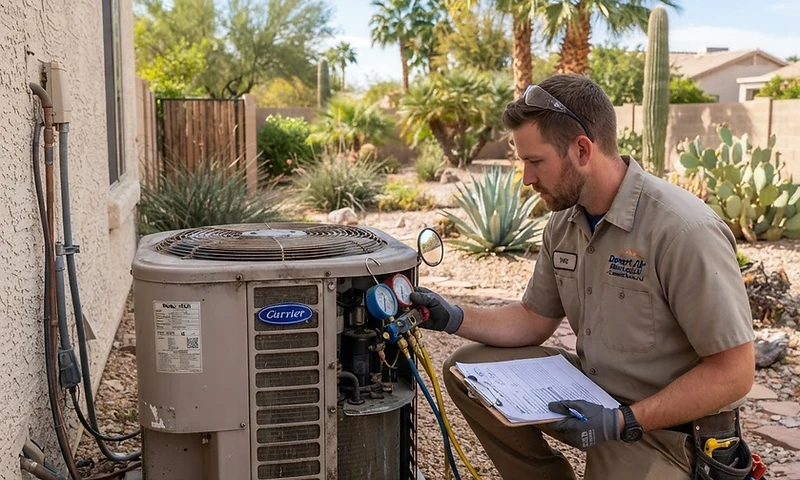
If you're on the fence, here's what we recommend: get a professional assessment. A qualified technician can inspect your system, tell you exactly what's wrong, estimate remaining lifespan, and give you an honest recommendation — repair or replace — based on your specific situation.
At All Valley Air, we've been helping Coachella Valley families make this decision for over 35 years. We'll never push you toward replacement if a repair makes sense — and we'll never recommend a cheap repair that's just going to fail again next season.
If you're dealing with an aging AC and aren't sure which way to go, give us a call. We offer free consultations and will walk you through your options — repair, replacement, or something in between — so you can make the right call for your home, your comfort, and your budget.
Frequently Asked Questions
How do I find out how old my AC unit is?
Check the metal nameplate on the outdoor condenser unit for a manufacture date. If it's not listed, the serial number usually encodes the year — the first two digits often represent the year of manufacture. You can also call us with the serial number and we'll look it up for you.
Is compressor failure a sign I should replace my AC?
Usually, yes. The compressor is the most expensive single component in an AC system. If it fails on a unit that's 10+ years old, replacing the entire system is almost always more cost-effective than replacing just the compressor — especially since a new system comes with a full warranty and better efficiency.
Does a ductless mini-split last longer than a central AC?
Generally, yes. Ductless mini-splits often last 15-20 years compared to 12-17 for central AC. They have fewer mechanical components exposed to the elements, and each indoor unit operates independently, reducing overall system wear. They're also more efficient since they don't lose energy through ductwork.
Does thermostat use affect AC lifespan?
It can. Constantly adjusting the temperature up and down makes the system cycle on and off more frequently, which adds wear. A programmable or smart thermostat that maintains consistent temperatures — and raises the setpoint when you're away — reduces unnecessary cycling and can extend the life of your system.
All Valley Air Team
All Valley Air Conditioning & Heating